

Fifty-four percent of GenZ finance employees still love Excel and actively enjoy using it, according to new research. This challenges the assumption that younger professionals prefer to abandon spreadsheets. Rather than replacing Excel with newer tools, Gen Z is reinforcing its role in finance by using it daily for forecasting, reporting, and analysis.
This shift signals that Excel remains central to modern finance workflows, evolving alongside automation and AI instead of being displaced by them.
A New Generation of Spreadsheet Power Users
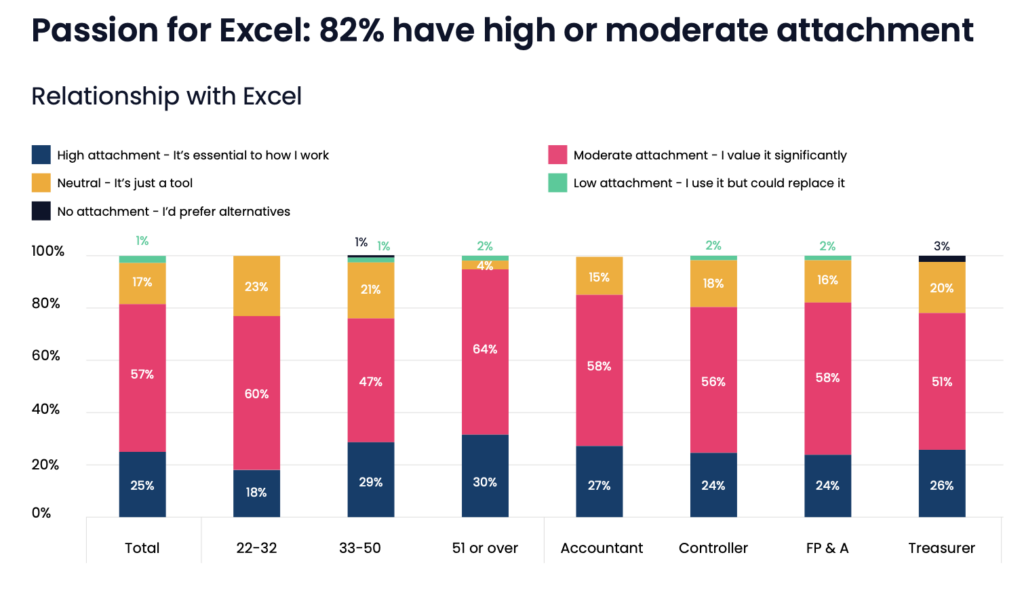
One of the most striking findings from recent finance workforce research is the level of enthusiasm Gen Z professionals show toward Excel. More than half of finance employees aged roughly 22 to 32 say they actively enjoy working in Excel, a higher share than older generations. This challenges the assumption that younger workers prefer to avoid spreadsheets in favor of newer platforms.
Their usage patterns reinforce that sentiment. A significant majority of Gen Z finance professionals spend more than five hours per day in Excel, and a notable portion spend nearly their entire workday inside spreadsheets. Rather than treating Excel as a legacy tool, they use it as a flexible workspace for analysis, modeling, and problem-solving.
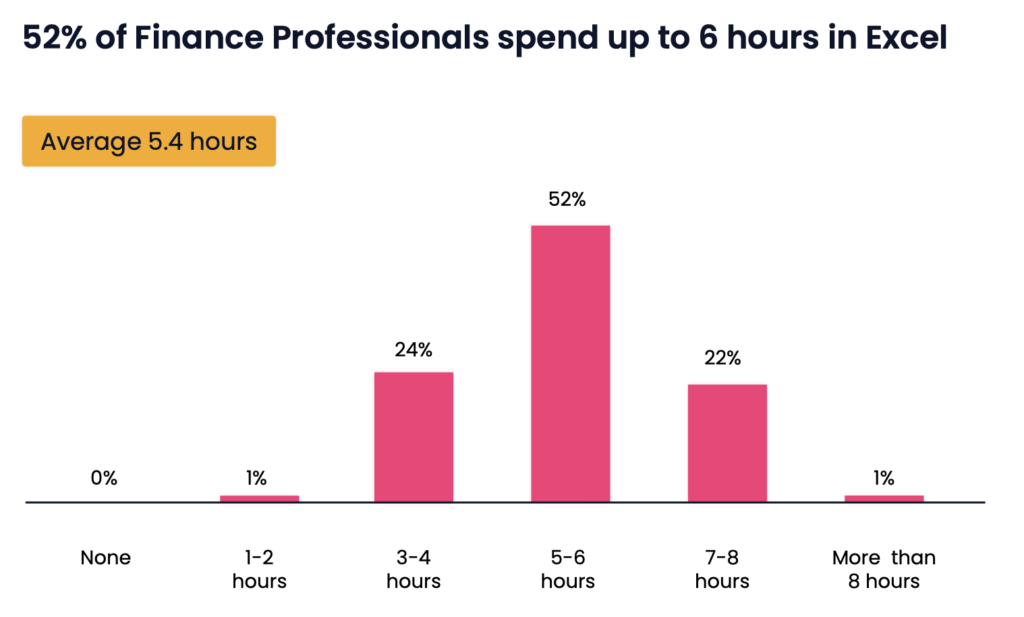
This behavior has led researchers to describe a growing cohort of finance professionals as “Generation Excel”, a group defined not by age, but by shared reliance on spreadsheets across roles and seniority levels.
Why Excel Still Dominates Finance Workflows
Excel’s staying power comes down to practicality. Despite the growing number of FP&A platforms, ERPs, and analytics tools on the market, most finance workflows still pass through Excel at some stage. Forecasting, budgeting, consolidation, variance analysis, and month-end close processes frequently rely on spreadsheets as the final layer where data is reviewed and decisions are made.
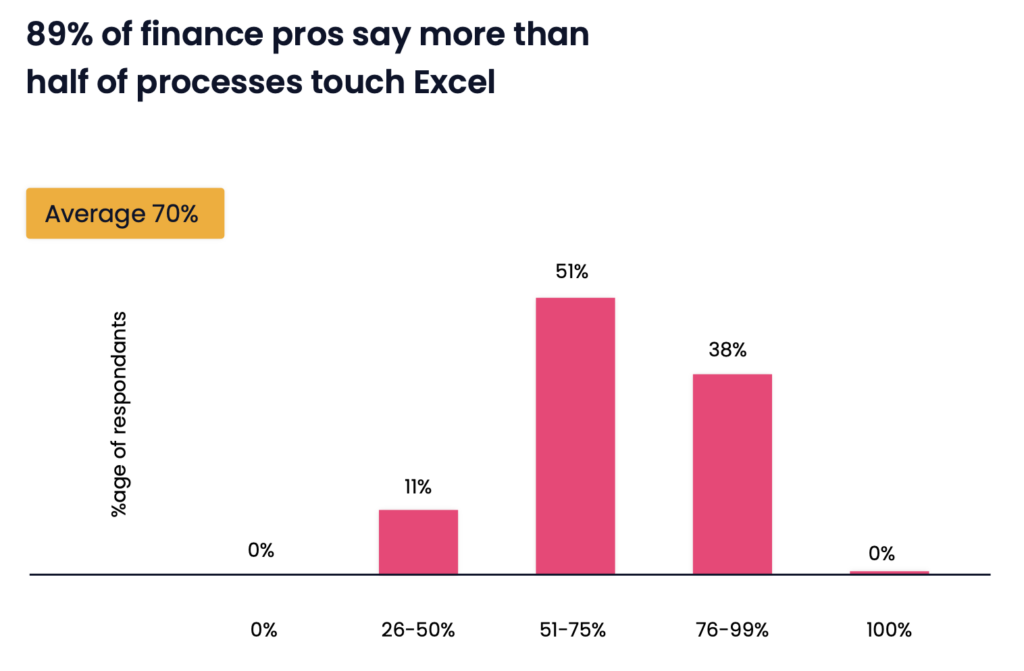
Survey data shows that nearly nine out of ten finance professionals say more than half of their financial processes involve Excel. This isn’t limited to small teams or legacy organizations, large enterprises report just as much spreadsheet dependency as mid-sized companies.
Excel also remains the most popular business application in the CFO’s office, outperforming ERPs, FP&A platforms, presentation tools, and collaboration software. For many finance teams, it remains the fastest way to explore numbers, test assumptions, and communicate insights.
Emotional Attachment and Career Impact
The relationship finance professionals have with Excel goes beyond convenience. A large majority report a strong emotional attachment to the tool, describing it as essential to how they work. While older professionals still show the deepest attachment overall, younger employees are close behind, demonstrating that Excel loyalty is not simply a generational artifact.
Excel proficiency also plays a meaningful role in career progression. Most finance professionals say their Excel skills contributed directly to advancement, with many citing it as a major factor in promotions or expanded responsibilities. For GenZ workers in particular, Excel is professional currency.
This attachment shows up clearly in hiring preferences. A strong majority of finance professionals say they would react negatively to a job offer that restricted Excel use, and many would decline roles at companies that banned it entirely. Among younger workers, resistance to Excel-free environments is especially pronounced.
The Love-Hate Reality of Excel
Despite widespread affection, Excel is not without frustration. Many finance professionals describe their relationship with spreadsheets as both essential and exhausting. The most common pain points are familiar: data consolidation, manual updates, version control, collaboration challenges, and error detection.
These issues come at a cost. Finance teams report spending hours each month hunting down spreadsheet errors, and nearly everyone surveyed has discovered a material Excel mistake before sharing work externally. The pressure of peak finance periods, combined with manual spreadsheet work, contributes to stress, long hours, and missed personal time.
Yet even with these drawbacks, very few finance professionals say they dislike Excel outright. Instead, most see its limitations as operational challenges to be managed, not reasons to abandon the tool.
Excel’s Role in a World of AI and Automation
What’s particularly notable is how finance professionals view Excel’s future alongside AI. Rather than seeing automation as a replacement, most expect Excel to remain equally important (or even more important) over the next decade. Younger workers are especially confident that spreadsheets will continue to be the backbone of finance workflows.
This outlook reflects how Excel has evolved. With integrations, automation layers, and AI-powered features, Excel increasingly acts as a front-end interface for advanced analysis rather than a standalone spreadsheet. Finance teams expect modernization efforts to succeed when they enhance Excel, not eliminate it.
Why Gen Z Is Reinforcing Excel’s Future
The narrative that younger workers want to “move on” from spreadsheets doesn’t hold up under scrutiny. Instead, Gen Z finance professionals are doubling down on Excel because it aligns with how they think and work. It’s flexible, transparent, and adaptable to nearly any business problem.
As these professionals move into leadership roles, their preferences will shape finance strategy and technology decisions. Excel’s future in the CFO’s office appears secure, not because organizations failed to modernize, but because the next generation is actively choosing to build their careers inside the grid.
In short, Gen Z finance employees still love Excel, and that love is helping define the future of finance itself.